
What Quality Standards Must a Top Commercial Plywood Manufacturer Meet?
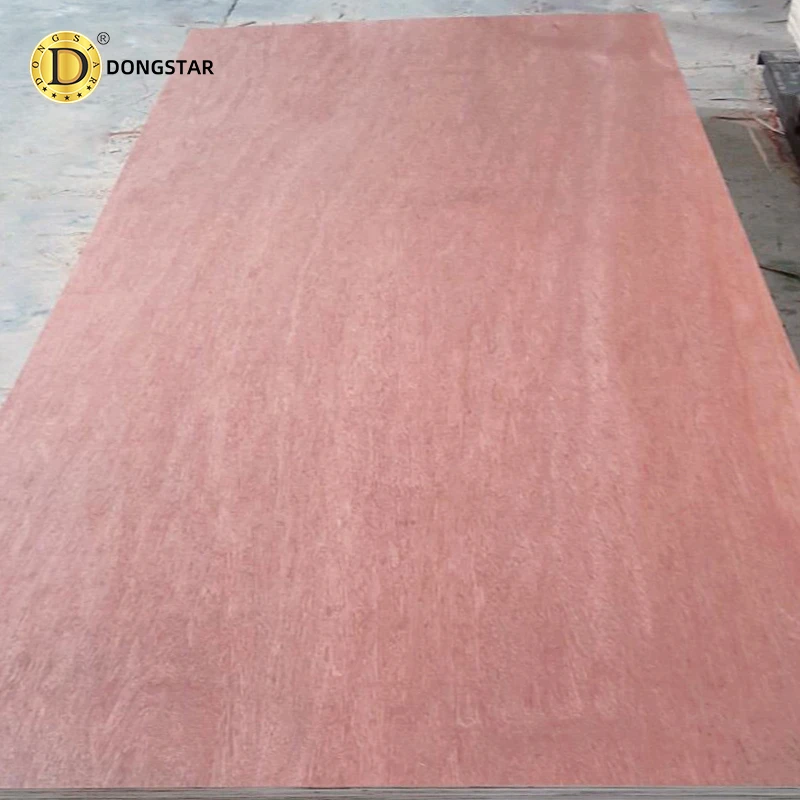
Top-tier suppliers must guarantee formaldehyde emissions below 0.5 mg/L, complying with E0 standards to ensure safety in enclosed commercial spaces. Every batch requires a documented moisture content between 8% and 12%, verified by electronic resistance meters across a random sample size of 50 panels per container. A reliable Commercial Plywood Manufacturer provides a formal Certificate of Analysis, confirming a bonding strength greater than 1.2 MPa after 72 hours of boiling. Consistency in these metrics prevents structural failures and ensures that materials meet international building codes for load-bearing applications.
Raw material procurement starts with the selection of high-density timber species. Factories sourcing wood from sustainable forests report a 15% improvement in board stability, as consistent species density reduces internal warping during environmental temperature shifts.
High-density hardwoods allow for a higher Modulus of Rupture, often exceeding 40 N/mm2 in 18mm panels. Suppliers providing timber harvest certificates from 2025 demonstrate better control over the physical properties of the inner veneer layers.
Consistent timber density relies on the accuracy of the rotary peeling process. Lathes that undergo calibration every 8 hours produce veneers with thickness variations limited to 0.1mm, ensuring that the final board maintains uniform thickness across its entire surface area.
| Metric | Industry Target | Tolerance Range |
| Veneer Thickness | 0.5mm | 0.02mm |
| Peeling Speed | 100 m/min | 5 m/min |
| Lathe Maintenance | 3 times/day | 0 error |
Uniform veneer thickness directly affects the performance of the adhesive application stage. When veneers are processed with 0.1mm precision, the automated glue spreaders distribute resin with an error margin of less than 2%, preventing weak spots in the bond line.
Phenolic resin application requires a spread rate of 280 grams per square meter to ensure full coverage. Achieving this precise distribution prevents delamination, which occurs in 12% of poorly manufactured panels under high-humidity conditions.
Correct resin application maintains the structural integrity of the panel during the hot-pressing cycle. Pressing 18mm panels at 130°C for 15 minutes creates a cross-linked bond that withstands long-term mechanical stress in structural settings.
| Pressing Variable | Target Parameter | Monitoring Method |
| Temperature | 130°C | Infrared sensors |
| Pressure | 1.5 MPa | Hydraulic gauges |
| Duration | 15 Minutes | Automated timers |
Precise pressing conditions ensure the board reaches its final thickness without internal air pockets. Panels containing internal voids show a 20% reduction in stiffness, as detected by ultrasonic testing equipment used by high-end producers during quality control phases.
Ultrasonic testing in 2026 confirms that properly pressed boards contain less than 1% internal void area. This level of internal integrity allows contractors to use these boards for heavy-duty shelving and flooring without risks of buckling under load.
Boards that pass the pressing stage require precise sanding to achieve the final thickness and surface smoothness. Wide-belt sanders equipped with 240-grit belts remove 0.5mm of material while maintaining a parallel surface plane, which is essential for uniform thickness.
| Sanding Parameter | Industry Standard | Surface Quality |
| Grit Size | 240 Mesh | Fine finish |
| Thickness Variance | 0.3mm | Industry tolerance |
| Dust Extraction | 95% efficiency | Clean surface |
Sanding to a fine finish allows for efficient application of protective coatings or decorative laminates. Suppliers who maintain their sanding belts ensure that 98% of their output arrives with a surface roughness of less than 50 microns, simplifying the secondary fabrication process for end-users.
Factories that monitor belt wear every 4 hours report 10% fewer surface defects in their outbound shipments. This attention to detail reduces the amount of rework required during the assembly of large commercial interior projects.
Surface finish consistency ensures that the panels perform well in environments where aesthetics and durability are equally important. After sanding, panels enter a humidity-controlled storage zone to reach an equilibrium moisture content of 10% before shipping.
| Storage Metric | Target Value | Monitoring Interval |
| Relative Humidity | 50% | Continuous |
| Ambient Temp | 22°C | 24-hour logs |
| Equilibrium Content | 10% | Daily sampling |
Maintaining the correct moisture level during storage prevents the boards from absorbing ambient humidity before they are packaged for transit. Suppliers that utilize moisture-resistant packaging reduce the risk of mold growth during ocean voyages, which can take up to 45 days.
Data from 2025 shipping logs shows that vacuum-sealed or plastic-wrapped bundles maintain a moisture content within 1% of the factory exit measurement. Proper packaging keeps the panels stable until they reach the site for installation.
Safe delivery depends on the container loading protocols, including the use of silica gel desiccant packs. Loading 2kg of desiccants per 20ft container absorbs excess moisture, preventing condensation on the panel surfaces during significant temperature fluctuations in international maritime routes.
| Logistics Step | Purpose | Expected Outcome |
| Desiccant Placement | Moisture control | No mold growth |
| Pallet Bracing | Structural safety | Zero breakage |
| Document Verification | Traceability | Rapid clearance |
Documentation ensures that every shipment meets the technical requirements specified in the purchase order. Suppliers providing detailed COA reports with every batch allow engineers to verify the physical properties of the panels before they enter the construction site, reducing disputes by 30%.
Manufacturers maintaining comprehensive COA databases allow clients to verify the shear strength of every individual batch. This transparency helps project managers calculate load-bearing capacities with high accuracy, ensuring safety in building design.
Reliable production stems from integrating these technical steps into a singular quality management system. Suppliers that document their processes from timber selection to final loading ensure that the plywood performs as expected in professional commercial settings for the entire lifespan of the structure.