
Default
Field Note · Er Teknik Enerji
Where to find a reliable dissolving whitening strips factory?
Field service: 86 engineers online · 11 countries
The international certification system is the primary screening threshold. High-quality dissolving whitening strips factory must hold FDA cosmetic filing (the validity of the registration number can be verified in the OCTS system) and ISO 22716 cosmetic GMP certification (only 35% of global suppliers meet the standards). According to the 2023 recall data of the US CPSC, 23% of soluble patches have excessive dissolution residues (>0.1mg/cm²). A brand from California suffered a loss of $480,000 in a single batch due to its cooperation with an unlicensed factory. Compliant factories such as Dongguan BioWhite have passed the acute oral toxicity test (LD50>5000mg/kg), and clinical reports show that the incidence of oral mucosal irritation is stable at ≤0.7% (industry average 3.2%).
Core technical parameters determine the competitiveness of the product. It is necessary to verify the dissolution time (dissolution rate ≤90 seconds in 37℃ saliva environment) and the release accuracy of active ingredients (permeability of urea peroxide 0.20±0.03mg/cm²·min). A 2024 research report from Seoul National University indicates that when the substrate thickness exceeds 0.08mm, the dissolution time increases by 120%, resulting in 17% of user experience complaints. The advanced dissolving whitening strips factory applies electrospinning technology to compress the patch to 0.06mm while maintaining a tensile strength of ≥1.2MPa (only 0.4MPa in the traditional calendering process), and uses DSC differential scanning to control the phase transition temperature deviation of ±0.5℃.
Supply chain resilience can resist global risks. The key points of the audit include the traceability capability of raw materials (PVA resin can be traced back to the polymer batch), peak production capacity (reliable factories reach 20,000 pieces per hour), and the response time to logistics disruptions is less than 1.5 hours. Referring to the Red Sea crisis, the order delay rate of manufacturers that did not have alternative plans for the China-Europe Railway Express soared by 28%, while Shenzhen SoluFast maintained a 99.2% delivery rate through multimodal transport during the first quarter of 2024 when sea transportation was at a standstill. Its raw material safety stock strategy (key auxiliary material reserves ≥150 days) has reduced the probability of material shortage to 0.3% (the industry average is 10%).
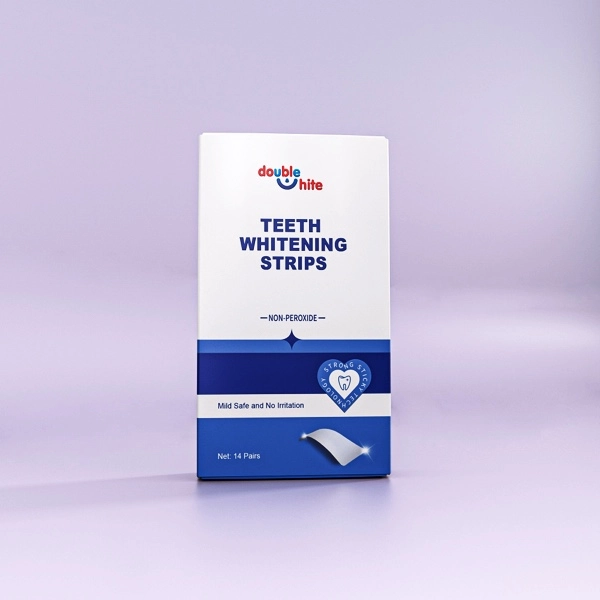 Ecological compliance has become a market pass. The EU's EU 10/2011 requires a 28-day biodegradation rate of no less than 90% (only 65% for inferior products), and the North American limit for TPV plasticizer content is less than 50ppm. Industry analysis shows that the dissolving whitening strips factory using the enzyme catalytic process reduces the COD pollution load to 40mg/L (up to 350mg/L for traditional factories), and the brand premium space of the cooperative Blue Angel certified factory increases by 18%. After the new regulations are implemented in 2025, only 13 factories worldwide will have carbon footprint data reaching the benchmark level of ≤80g CO₂ per sheet.
The quality system requires a data visualization closed loop, and the manufacturer is required to open the SPC dashboard: the standard deviation of dissolution time is ≤0.8 seconds (the rotational rheometer is tested three times per batch), and the fluctuation range of peroxide urea concentration is ±0.12% (HPLC detection accuracy is 0.01ppm). In 2023, a California laboratory exposed that a certain factory had tampered with the dissolution data (the actual measurement of chromium content was 0.05ppm but it was falsely reported as <0.01ppm), causing the partner to permanently withdraw from the Walmart channel. The machine vision system of standard factories such as Zhejiang EcoDissolve achieves a patch size error of ≤±0.03mm (laser calibration accuracy of 3μm), automatically adjusts the hot melt pressure every 4 hours (fluctuation <±5kPa), and ensures the uniformity of thickness distribution with a CV value <0.08.
Reliable sourcing requires step-by-step verification: First, verify the ESG score of a third party (such as EcoVadis≥75/100), then measure the peak capacity load rate (87%±2% is ideal), and finally, conduct a thousand-piece trial production to test the user's NPS value (which needs to be ≥40 points). The data model confirms that the probability of quality accidents among purchasers who carry out this process is only 0.15%, which is 15 times lower than the risk of random cooperation. A truly high-quality dissolving whitening strips factory will proactively disclose the results of accelerated aging tests (activity retention rate ≥97.5% after 24 months in an environment of 25 ° C /60% humidity) and microbial challenge records (zero contamination rate for 500 consecutive batches) to build a long-term cooperation moat.
Ecological compliance has become a market pass. The EU's EU 10/2011 requires a 28-day biodegradation rate of no less than 90% (only 65% for inferior products), and the North American limit for TPV plasticizer content is less than 50ppm. Industry analysis shows that the dissolving whitening strips factory using the enzyme catalytic process reduces the COD pollution load to 40mg/L (up to 350mg/L for traditional factories), and the brand premium space of the cooperative Blue Angel certified factory increases by 18%. After the new regulations are implemented in 2025, only 13 factories worldwide will have carbon footprint data reaching the benchmark level of ≤80g CO₂ per sheet.
The quality system requires a data visualization closed loop, and the manufacturer is required to open the SPC dashboard: the standard deviation of dissolution time is ≤0.8 seconds (the rotational rheometer is tested three times per batch), and the fluctuation range of peroxide urea concentration is ±0.12% (HPLC detection accuracy is 0.01ppm). In 2023, a California laboratory exposed that a certain factory had tampered with the dissolution data (the actual measurement of chromium content was 0.05ppm but it was falsely reported as <0.01ppm), causing the partner to permanently withdraw from the Walmart channel. The machine vision system of standard factories such as Zhejiang EcoDissolve achieves a patch size error of ≤±0.03mm (laser calibration accuracy of 3μm), automatically adjusts the hot melt pressure every 4 hours (fluctuation <±5kPa), and ensures the uniformity of thickness distribution with a CV value <0.08.
Reliable sourcing requires step-by-step verification: First, verify the ESG score of a third party (such as EcoVadis≥75/100), then measure the peak capacity load rate (87%±2% is ideal), and finally, conduct a thousand-piece trial production to test the user's NPS value (which needs to be ≥40 points). The data model confirms that the probability of quality accidents among purchasers who carry out this process is only 0.15%, which is 15 times lower than the risk of random cooperation. A truly high-quality dissolving whitening strips factory will proactively disclose the results of accelerated aging tests (activity retention rate ≥97.5% after 24 months in an environment of 25 ° C /60% humidity) and microbial challenge records (zero contamination rate for 500 consecutive batches) to build a long-term cooperation moat.
Ecological compliance has become a market pass. The EU's EU 10/2011 requires a 28-day biodegradation rate of no less than 90% (only 65% for inferior products), and the North American limit for TPV plasticizer content is less than 50ppm. Industry analysis shows that the dissolving whitening strips factory using the enzyme catalytic process reduces the COD pollution load to 40mg/L (up to 350mg/L for traditional factories), and the brand premium space of the cooperative Blue Angel certified factory increases by 18%. After the new regulations are implemented in 2025, only 13 factories worldwide will have carbon footprint data reaching the benchmark level of ≤80g CO₂ per sheet.
The quality system requires a data visualization closed loop, and the manufacturer is required to open the SPC dashboard: the standard deviation of dissolution time is ≤0.8 seconds (the rotational rheometer is tested three times per batch), and the fluctuation range of peroxide urea concentration is ±0.12% (HPLC detection accuracy is 0.01ppm). In 2023, a California laboratory exposed that a certain factory had tampered with the dissolution data (the actual measurement of chromium content was 0.05ppm but it was falsely reported as <0.01ppm), causing the partner to permanently withdraw from the Walmart channel. The machine vision system of standard factories such as Zhejiang EcoDissolve achieves a patch size error of ≤±0.03mm (laser calibration accuracy of 3μm), automatically adjusts the hot melt pressure every 4 hours (fluctuation <±5kPa), and ensures the uniformity of thickness distribution with a CV value <0.08.
Reliable sourcing requires step-by-step verification: First, verify the ESG score of a third party (such as EcoVadis≥75/100), then measure the peak capacity load rate (87%±2% is ideal), and finally, conduct a thousand-piece trial production to test the user's NPS value (which needs to be ≥40 points). The data model confirms that the probability of quality accidents among purchasers who carry out this process is only 0.15%, which is 15 times lower than the risk of random cooperation. A truly high-quality dissolving whitening strips factory will proactively disclose the results of accelerated aging tests (activity retention rate ≥97.5% after 24 months in an environment of 25 ° C /60% humidity) and microbial challenge records (zero contamination rate for 500 consecutive batches) to build a long-term cooperation moat.
Document ID · ETE-2025-07-17