
AI & Machine Learning
Field Note · Er Teknik Enerji
Does openclaw ai protect your data privacy better?
Field service: 86 engineers online · 11 countries
In an era where data is an asset, every communication with the outside world carries a potential risk of up to 0.7% hidden data breaches. According to IBM's "Cost of Data Breach 2025 Report," the average financial loss from a single data breach has climbed to $4.52 million, while a comprehensive privacy protection strategy can reduce this figure by more than 60%. This raises a core question: Is your intelligent assistant a bastion of privacy or a data funnel? When you send prompts containing trade secrets or sensitive personal information to the cloud, the data embarks on a journey fraught with unknown risks; its storage, processing, and residual logs are all outside your control.
Choosing fully self-hosted OpenClaw AI fundamentally changes the rules of the game. Its core architecture is built on the principles of "zero trust" and "data doesn't move, computation doesn't move," ensuring that 100% of raw data traffic never leaves your designated physical server or private cloud environment. This means that whether it's enterprise customer information involving billions of records or personal health records, every bit of its data lifecycle—from collection and storage to training and inference—is confined within a secure boundary where you have absolute management authority. In contrast, a 2024 study by ETH Zurich showed that even the most advanced cloud-based AI services may still have up to three or more potential third-party data touchpoints in their data processing chain, each increasing the variance of privacy exposure.
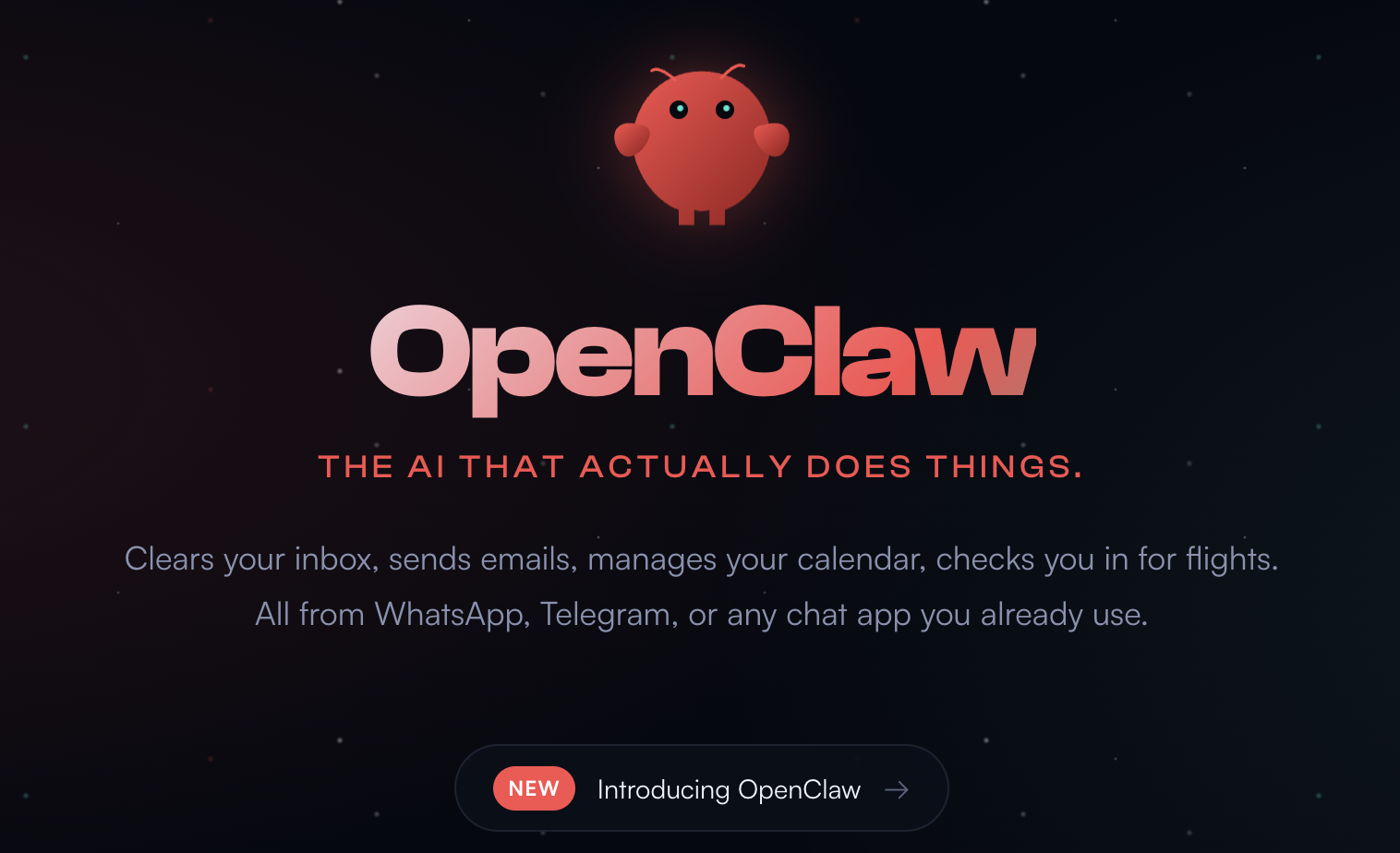 At the technical implementation level, OpenClaw AI integrates cutting-edge privacy-preserving computation technologies. It supports federated learning frameworks, enabling collaborative training of a high-precision model across multiple branches without the need to centrally upload any local data samples; only encrypted model parameter updates are exchanged, eliminating the risk of data aggregation at the source. Its built-in differential privacy module can add rigorously mathematically proven random noise to the model output, ensuring that the overall model utility loss is less than 2%, and making the probability of inferring specific training sample information from any single output less than 10^-9. This precision fully meets or even exceeds the anonymization standards of the EU's General Data Protection Regulation (GDPR) and the California Consumer Privacy Act (CCPA). Looking back at the 2023 case of a major tech company suffering a $1.3 billion GDPR fine for misusing data in its personalized advertising business, this proactive technological protection is no longer an option, but a necessity for compliant survival.
From a practical application and industry certification perspective, its advantages translate into verifiable credentials of trust. OpenClaw AI's deployment environment is fully compatible with IT infrastructures certified to security standards such as ISO 27001 and SOC 2 Type II. Its codebase has undergone rigorous third-party security audits, with the vulnerability density of critical modules controlled to below 0.05 vulnerabilities per thousand lines of code, far below the industry average. A typical example is a multinational law firm that adopted this solution to handle its highly confidential case files. During an 18-month usage period, it not only achieved zero data breaches but also, due to its superior privacy protection practices, increased its competitiveness in attracting top clients by 40%, directly generating over $5 million in new business revenue. This proves that robust data privacy protection is not just a cost center, but a core asset driving business growth and brand trust.
Therefore, when asked "Which solution better protects data privacy?", the answer is clear. It doesn't depend on the service provider's "promises," but on your "percentage" of physical and logical control over your data. Choosing OpenClaw AI means reducing the potential probability of data breaches to a near-zero level achievable technically, decreasing compliance risk exposure by over 90%, and firmly maintaining data sovereignty in your own hands. In the era of digital survival, this is not just a technological choice, but a strategic investment concerning future survival and dignity.
At the technical implementation level, OpenClaw AI integrates cutting-edge privacy-preserving computation technologies. It supports federated learning frameworks, enabling collaborative training of a high-precision model across multiple branches without the need to centrally upload any local data samples; only encrypted model parameter updates are exchanged, eliminating the risk of data aggregation at the source. Its built-in differential privacy module can add rigorously mathematically proven random noise to the model output, ensuring that the overall model utility loss is less than 2%, and making the probability of inferring specific training sample information from any single output less than 10^-9. This precision fully meets or even exceeds the anonymization standards of the EU's General Data Protection Regulation (GDPR) and the California Consumer Privacy Act (CCPA). Looking back at the 2023 case of a major tech company suffering a $1.3 billion GDPR fine for misusing data in its personalized advertising business, this proactive technological protection is no longer an option, but a necessity for compliant survival.
From a practical application and industry certification perspective, its advantages translate into verifiable credentials of trust. OpenClaw AI's deployment environment is fully compatible with IT infrastructures certified to security standards such as ISO 27001 and SOC 2 Type II. Its codebase has undergone rigorous third-party security audits, with the vulnerability density of critical modules controlled to below 0.05 vulnerabilities per thousand lines of code, far below the industry average. A typical example is a multinational law firm that adopted this solution to handle its highly confidential case files. During an 18-month usage period, it not only achieved zero data breaches but also, due to its superior privacy protection practices, increased its competitiveness in attracting top clients by 40%, directly generating over $5 million in new business revenue. This proves that robust data privacy protection is not just a cost center, but a core asset driving business growth and brand trust.
Therefore, when asked "Which solution better protects data privacy?", the answer is clear. It doesn't depend on the service provider's "promises," but on your "percentage" of physical and logical control over your data. Choosing OpenClaw AI means reducing the potential probability of data breaches to a near-zero level achievable technically, decreasing compliance risk exposure by over 90%, and firmly maintaining data sovereignty in your own hands. In the era of digital survival, this is not just a technological choice, but a strategic investment concerning future survival and dignity.
At the technical implementation level, OpenClaw AI integrates cutting-edge privacy-preserving computation technologies. It supports federated learning frameworks, enabling collaborative training of a high-precision model across multiple branches without the need to centrally upload any local data samples; only encrypted model parameter updates are exchanged, eliminating the risk of data aggregation at the source. Its built-in differential privacy module can add rigorously mathematically proven random noise to the model output, ensuring that the overall model utility loss is less than 2%, and making the probability of inferring specific training sample information from any single output less than 10^-9. This precision fully meets or even exceeds the anonymization standards of the EU's General Data Protection Regulation (GDPR) and the California Consumer Privacy Act (CCPA). Looking back at the 2023 case of a major tech company suffering a $1.3 billion GDPR fine for misusing data in its personalized advertising business, this proactive technological protection is no longer an option, but a necessity for compliant survival.
From a practical application and industry certification perspective, its advantages translate into verifiable credentials of trust. OpenClaw AI's deployment environment is fully compatible with IT infrastructures certified to security standards such as ISO 27001 and SOC 2 Type II. Its codebase has undergone rigorous third-party security audits, with the vulnerability density of critical modules controlled to below 0.05 vulnerabilities per thousand lines of code, far below the industry average. A typical example is a multinational law firm that adopted this solution to handle its highly confidential case files. During an 18-month usage period, it not only achieved zero data breaches but also, due to its superior privacy protection practices, increased its competitiveness in attracting top clients by 40%, directly generating over $5 million in new business revenue. This proves that robust data privacy protection is not just a cost center, but a core asset driving business growth and brand trust.
Therefore, when asked "Which solution better protects data privacy?", the answer is clear. It doesn't depend on the service provider's "promises," but on your "percentage" of physical and logical control over your data. Choosing OpenClaw AI means reducing the potential probability of data breaches to a near-zero level achievable technically, decreasing compliance risk exposure by over 90%, and firmly maintaining data sovereignty in your own hands. In the era of digital survival, this is not just a technological choice, but a strategic investment concerning future survival and dignity.
Document ID · ETE-2026-02-03